Service 04Paint protection film in Largo, FLRock chips stop at the film
Paint protection film (PPF), also called a clear bra, is a clear, self-healing urethane layer applied over your paint. It's rock chip protection: it takes the chips, sand and door dings a coating can't — and the front end of a car on I-275 or US-19 sees plenty of all three.
- Clear, self-healing film
- Front end or full body
- Pairs with ceramic
SCROLL THE PROCESS
01STEP 01 / 04
Inspect & prep
Paint inspected and corrected where needed. The film is clear, so anything left underneath stays visible for years.
02STEP 02 / 04
Pattern & install
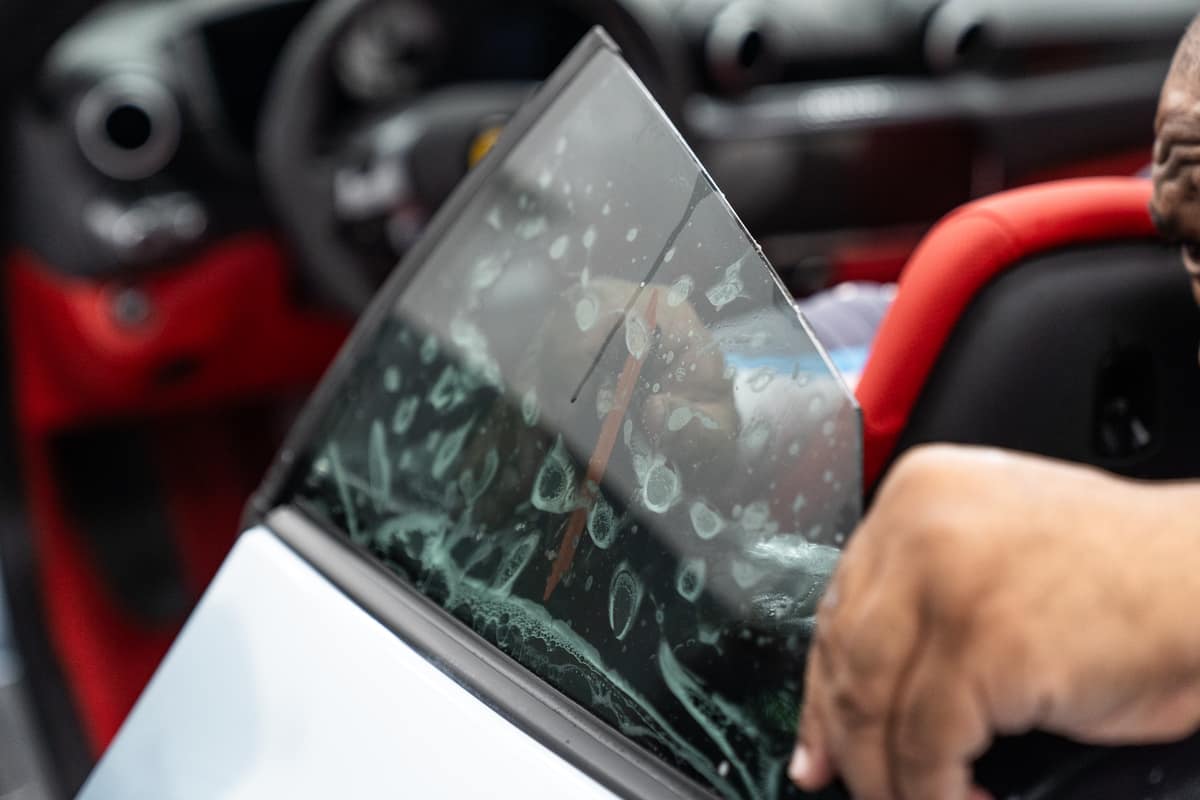
Film cut to the panel and laid wet, then squeegeed out so it sits flat with no trapped water or dust.
03STEP 03 / 04
Edges & tuck
Edges wrapped or tucked wherever the panel allows, so the seams disappear and don't lift.
04STEP 04 / 04
Aftercare
The film settles over the first days. We walk you through washing it, what to avoid, and how light scratches heal in the sun.